Most people arrive at Teeth Whitening with the same three questions in mind: will it hurt, is it safe, and does it actually work. Those are reasonable questions, and this page answers them in plain terms rather than sales language. Rather than describing the treatment in the abstract, it walks through the service as you would experience it — the checks that happen before anything is applied, what the appointment itself feels like, and the aftercare routine that decides how long your result lasts.
The service described here is built around a single, comfortable appointment. There are no trays to take home and wear each night, no multi-week regime to remember, and no need to return repeatedly before you see a difference. You attend, the treatment is carried out for you by a trained practitioner, and you leave with a visible change in the appearance of your teeth. For people with full diaries, that simplicity is often the deciding factor.
Teeth Whitening is a cosmetic treatment, not a health treatment, and it is described that way throughout this page. It lifts and reduces the appearance of staining on natural tooth surfaces. It does not repair decay, treat gum disease, straighten teeth, or change the colour of crowns, veneers, bridges, or tooth-coloured fillings. Being clear about those boundaries at the outset is part of a responsible service, because a result you were not expecting is not a good result, however bright it looks.
If you are weighing this up against other options, the results page sets out what a realistic shade change looks like, the prices page explains the cost structure, and the choose us page covers the standards a provider should be able to demonstrate before you book anything. Those comparing professional whitening services in other areas can also explore Ultimawhite Fylde for further information about available Teeth Whitening options.
What the Teeth Whitening Service Includes
The Teeth Whitening service is a package rather than a single procedure. The treatment session is the visible part, but the consultation before it and the guidance after it are what make the outcome predictable. Booking a whitening appointment with no assessment and no aftercare instructions is how people end up disappointed, uncomfortable, or both.
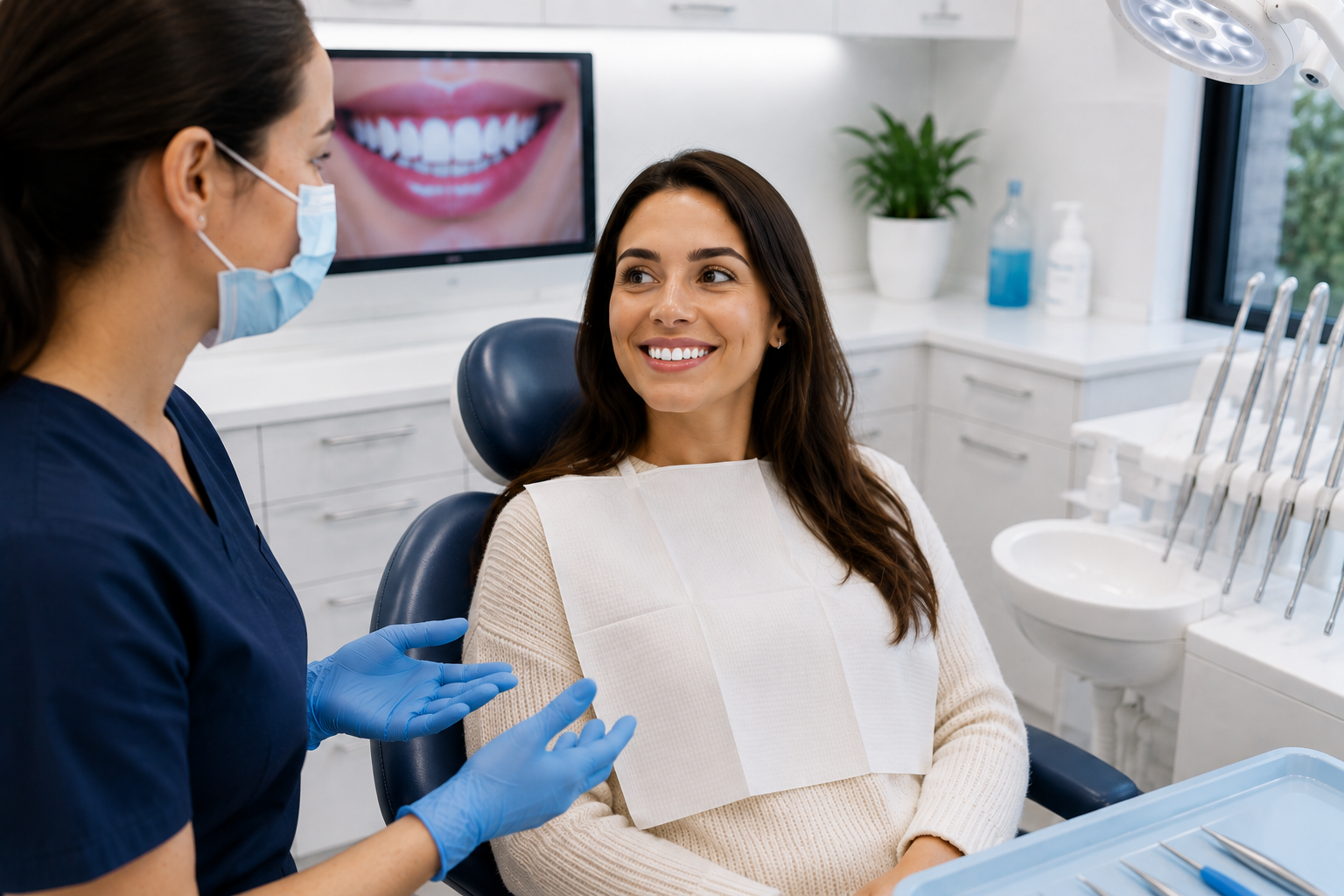
A conversation and visual check before anything is applied. This covers your dental history, any sensitivity you have experienced, existing restorations, and what you are hoping to achieve.
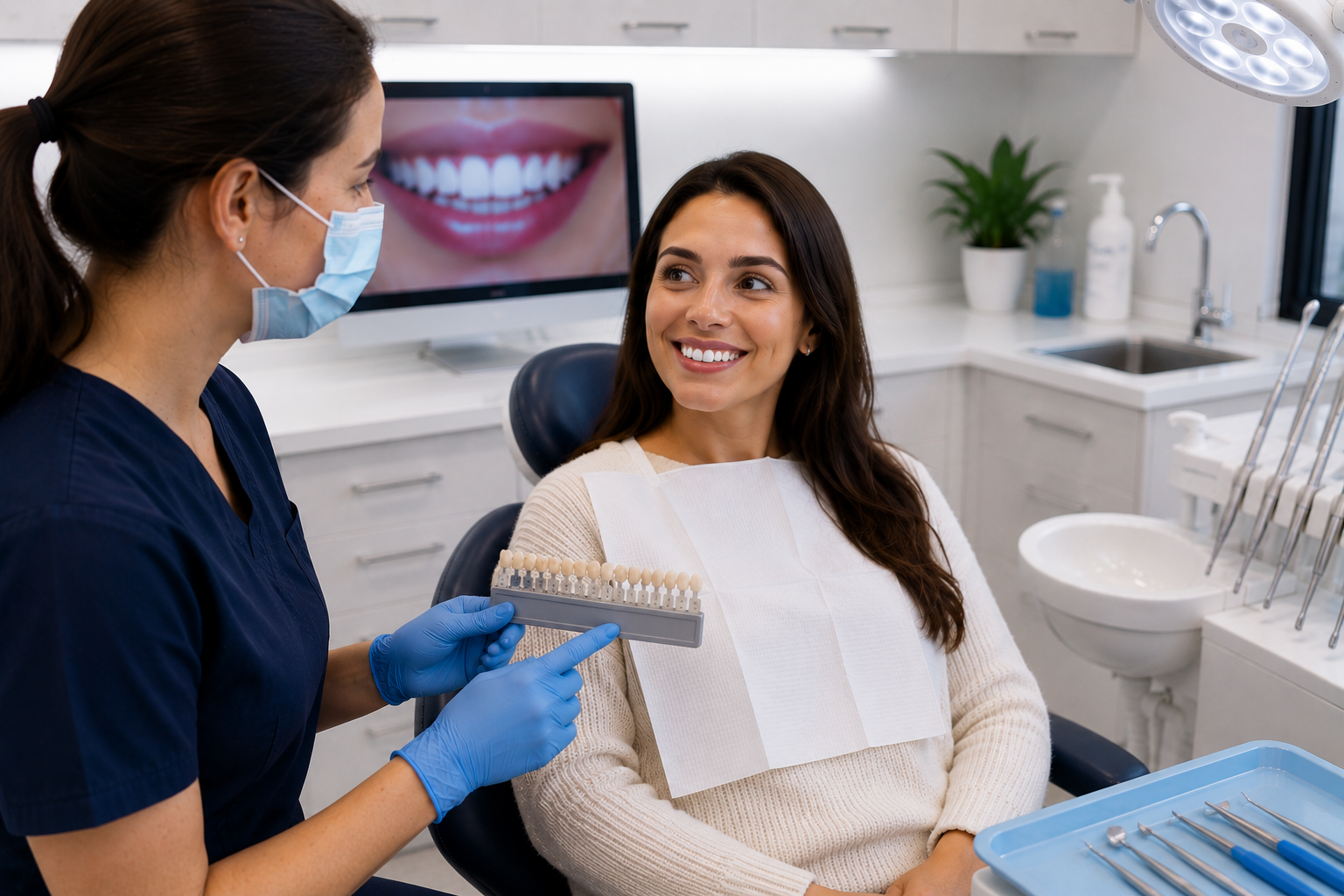
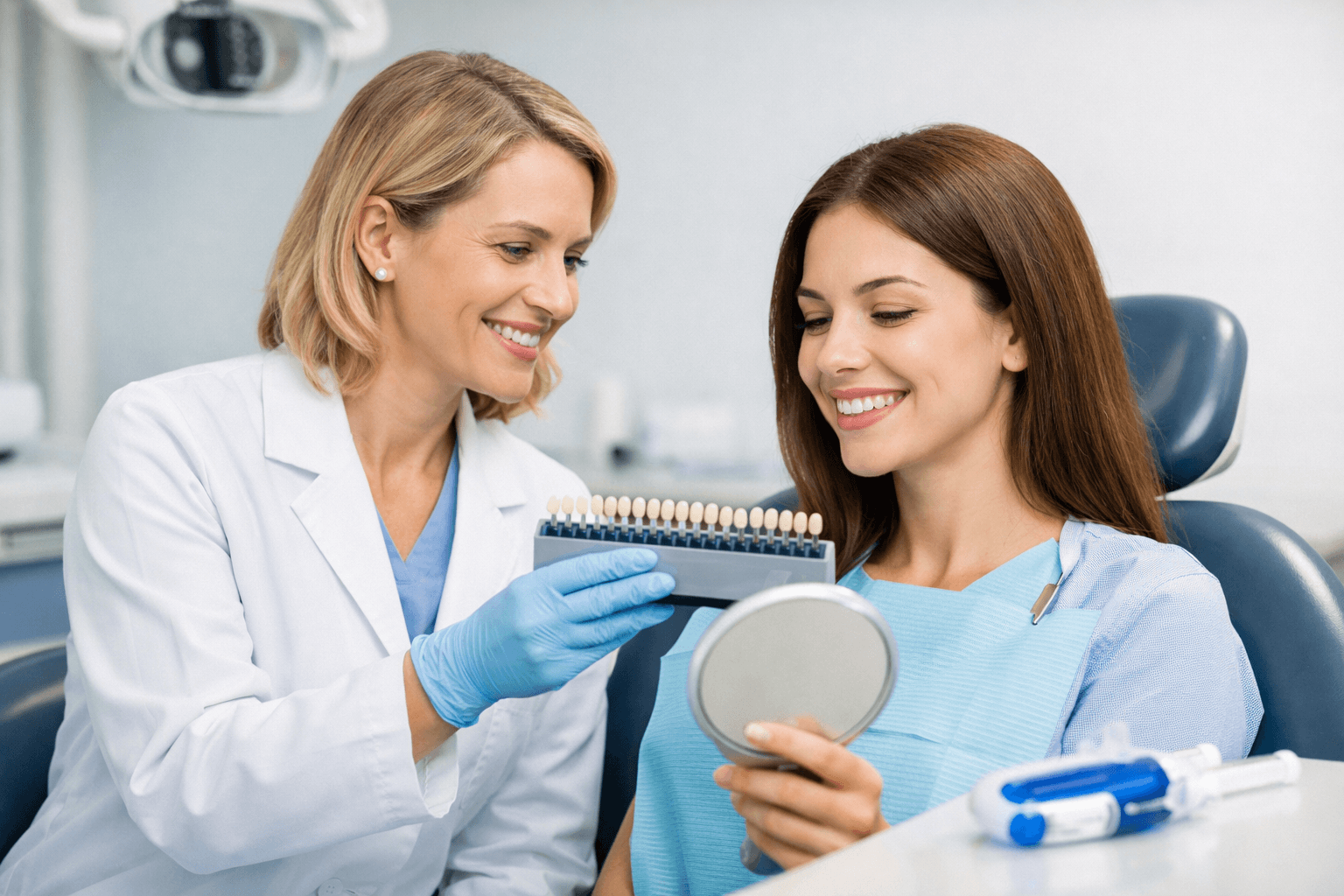
Your starting shade is recorded against a standard shade guide so the change can be measured objectively afterwards rather than judged from memory.
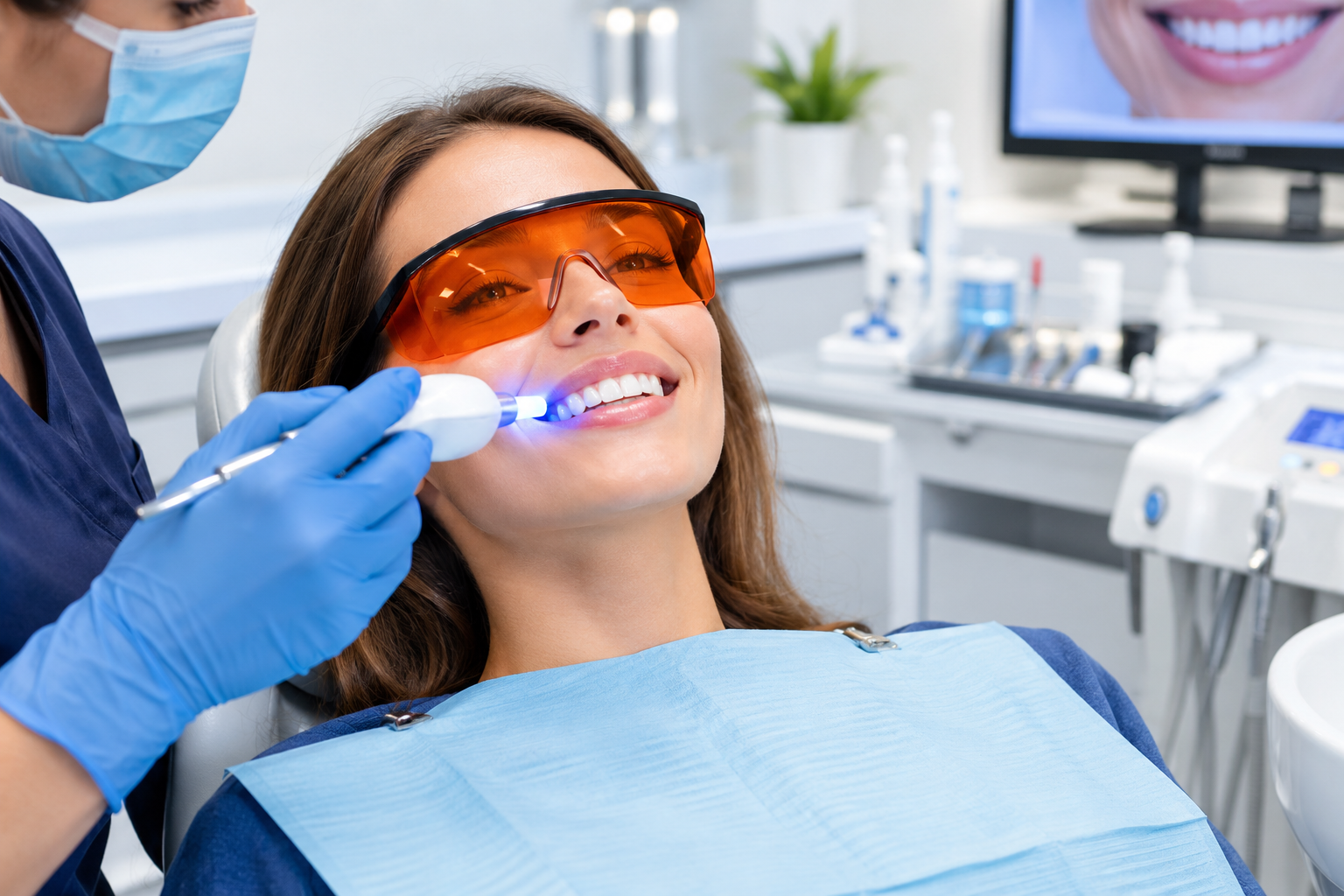
The whitening treatment is applied and managed for you across roughly an hour, in stages, with your comfort checked between each one.
A clear, written aftercare plan covering the critical first forty-eight hours, everyday habits, and when a top-up might be worth considering.
Why the Consultation Comes First
The consultation exists to answer one question: is Teeth Whitening the right thing for these particular teeth, right now. Most of the time the answer is yes. Occasionally it is "yes, but not yet" — for example where there is an untreated area of decay, sore or bleeding gums, or a recently placed filling that should be allowed to settle. In those cases the responsible course is to deal with the underlying issue through a dentist first. Whitening applied over an unresolved dental problem does not fix the problem and can make an uncomfortable situation worse.
The consultation also sets expectations, which matters more than people assume. Two people can undergo an identical appointment and come away with different degrees of change, because they started from different shades and different types of staining. Knowing that in advance is the difference between being pleased with a result and feeling short-changed by it.
What Is Discussed Before Treatment
- Any history of sensitivity to hot, cold, or sweet foods, and how pronounced it is.
- Existing dental work — crowns, veneers, bridges, and tooth-coloured fillings, particularly on front teeth.
- Recent dental treatment, and whether anything is still settling.
- Your daily habits: coffee, tea, red wine, smoking or vaping, and how often.
- What you are hoping for, described in your own words rather than in shade numbers.
- Any event you are working towards, so timing can be planned sensibly.
None of this is a formality. Each answer changes something about how the appointment is approached — the staging of the treatment, the aftercare emphasis, or in some cases the recommendation to see a dentist before proceeding.
The One-Hour Treatment Session Explained
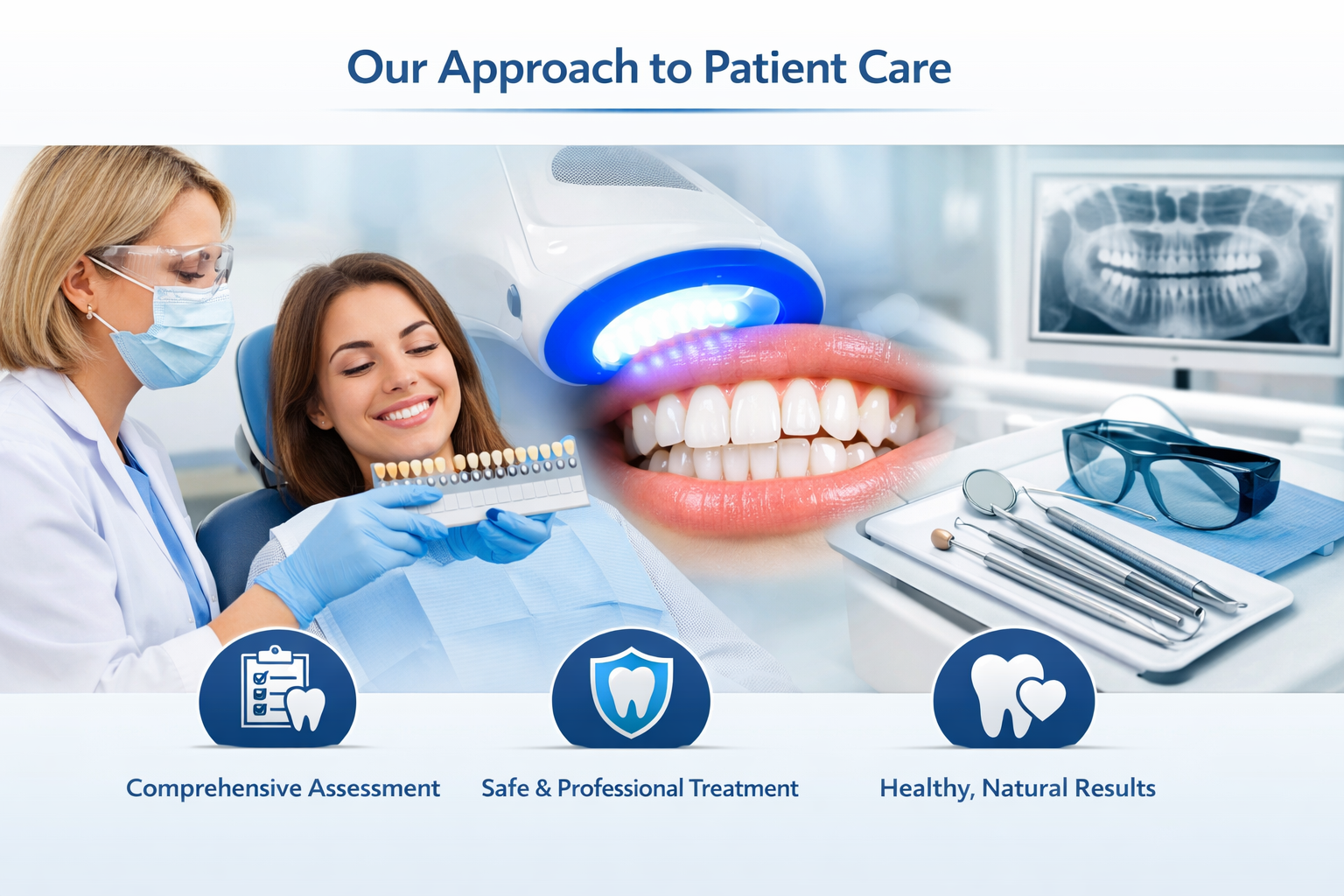
The appointment runs for approximately an hour from the moment you sit down to the moment you stand up. That hour is not one continuous application — it is divided into shorter stages, with checks in between. Understanding the shape of the appointment removes most of the apprehension people bring to a first session.
Settling In and Final Checks
The session opens with a brief recap of the consultation and a final look at your teeth and gums. If anything has changed since you booked — a new twinge, a recent filling, a mouth ulcer — this is the moment to say so. Your starting shade is confirmed and recorded. You are then seated comfortably, in a reclined position, and given a short explanation of what is about to happen and roughly how long each stage will take.
Preparation and Protection
Before any whitening treatment touches the tooth surface, the surrounding soft tissue is protected. Your lips and cheeks are gently held clear so that the treatment stays on the teeth themselves, and the gum line is shielded. Your teeth are wiped and dried so that the treatment makes even contact with the enamel rather than sitting on a film of saliva or plaque. This preparation stage is unglamorous and easy to rush, and it is precisely why the evenness of a professionally applied result is difficult to reproduce at home in a bathroom mirror.
The Application Stages
The whitening treatment is applied across the visible surfaces of the teeth in your smile line, then activated for a set period. That cycle is repeated, typically over three stages within the hour. Between stages the treatment is removed, the teeth are checked, and you are asked how you are finding it. If anything feels uncomfortable, the timing can be shortened or a stage dropped. Nothing about the session is fixed in a way that overrides how you actually feel during it.
During the activation periods there is nothing for you to do. You can close your mouth in the gaps between stages, and indicate at any point if you want to pause.
Assessment and Aftercare Briefing
At the end of the final stage the treatment is removed and your teeth are rinsed and cleaned. Your finishing shade is recorded against the same guide used at the start, so the change is measured on a like-for-like basis. You will usually be able to see the difference immediately. The session closes with the aftercare briefing — a short, practical explanation of what to eat and avoid over the next couple of days, and why that window matters so much.
What You Do Not Need to Do
- No impressions or moulds are taken, because there are no custom trays involved.
- No daily routine to maintain at home for weeks afterwards.
- No course of repeat appointments before you see a change.
- No time off work beyond the appointment itself.
A Peroxide-Free, Comfort-First Approach
A great many whitening products rely on peroxide as the active ingredient. Peroxide is effective, and it is also the ingredient most commonly associated with the sharp, short-lived sensitivity that whitening has a reputation for. For people who have tried whitening before and disliked how it felt, that association is usually the reason they have not tried again.
This Teeth Whitening service uses a peroxide-free approach instead. The intention is to lift and reduce the appearance of surface staining rather than to drive an aggressive bleaching reaction through the tooth. In practice that means the treatment is gentler on the enamel surface and on the gum tissue around it, and considerably more comfortable for most people during the session.
What "Gentler" Actually Means Here
Gentler is a word that gets used loosely, so it is worth defining. In this context it refers to three specific things. First, the absence of peroxide as the active agent, which removes the ingredient most often linked to acute sensitivity during treatment. Second, a staged application with checks between stages, so nothing runs longer than it needs to. Third, a focus on stain reduction rather than maximum possible shade change, which means the treatment is not pushed beyond the point where it stays comfortable.
The trade-off is honest and worth stating: an approach built around comfort is not chasing the most extreme result physically achievable. If your goal is the brightest possible outcome regardless of how it feels along the way, a different route may suit you better. If your goal is a noticeably fresher, cleaner-looking smile achieved in one comfortable sitting, this approach is designed precisely for that.
Who Tends to Prefer This Route
People who tried a whitening product in the past, found it uncomfortable, and abandoned it before finishing. The comfort-first approach is largely designed with this group in mind.
Anyone who cannot commit to a nightly routine for several weeks and would rather deal with it in a single appointment that fits around work.
People who have never whitened before and want a measured, supervised first experience rather than experimenting with an unfamiliar product alone.
Comfort and Sensitivity During Treatment
Sensitivity is the single most common concern people raise before a first Teeth Whitening appointment, usually described as the fear of sudden sharp twinges. Most people who go through this treatment do not experience that. The peroxide-free approach, combined with staged application and checks between stages, is specifically intended to avoid it.
That said, no honest description of a cosmetic treatment claims a universal experience. A minority of people notice mild, short-lived sensitivity afterwards, most often to cold. Where it occurs it is typically transient and settles on its own within a day or so. Knowing that in advance means that if you do notice something, you recognise it as ordinary rather than alarming.
Reducing the Likelihood in Advance
- Mention any existing sensitivity at the consultation, however mild — it directly informs how the session is staged.
- Consider using a sensitivity-formulated toothpaste in the days leading up to your appointment if you already have sensitive teeth.
- Do not brush aggressively immediately before the appointment; a firm scrub can leave gums tender before you even sit down.
- Flag any recent dental work so it can be taken into account.
- Speak up during the session rather than waiting until the end — stages can be shortened at the time.
If You Notice Sensitivity Afterwards
The practical steps are simple. Avoid very hot and very cold food and drink for a day or two. Continue with a sensitivity-formulated toothpaste. Use a soft-bristled brush and moderate pressure. Avoid anything acidic in the immediate aftermath, since acid softens the enamel surface temporarily and compounds the feeling. In the ordinary course of events, that is enough and the sensation fades.
If discomfort is severe, sharply localised to one tooth, or persists beyond a few days, that pattern is not typical of whitening and is worth having looked at by a dentist. A single tooth that hurts distinctly more than its neighbours is more often a sign of something pre-existing that whitening has drawn attention to than a consequence of the treatment itself.
Professional Application Compared With At-Home Kits
Over-the-counter whitening kits are inexpensive and widely available, and for very light surface staining some people are satisfied with them. The difficulty is not usually the product itself but the application. Achieving an even result across every visible tooth, without letting the product sit on the gums, is genuinely hard to do to yourself. Strips crease. One-size trays do not match the shape of an individual jaw. Gel migrates. The result is often patchy in a way that is more noticeable than the original staining.
For people considering where to arrange a professionally managed appointment, you can also review the available Teeth Whitening clinic locations before deciding which treatment option is most convenient.
| Factor | Professional Teeth Whitening | Over-the-Counter Kits |
|---|---|---|
| Assessment | Consultation and visual check before anything is applied | None — suitability is assumed by the purchaser |
| Application | Applied for you by a trained practitioner | Self-applied, often without clear sight of back teeth |
| Evenness | Managed across the visible smile line in stages | Frequently uneven; creasing and migration are common |
| Time to result | Visible change within a single appointment | Days to weeks of daily use, if the course is completed |
| Adjustment | Staging shortened or paused in response to comfort | No adjustment mechanism beyond stopping |
| Aftercare | Specific written guidance and a follow-up point of contact | Generic leaflet instructions |
| Record of change | Shade recorded before and after | Judged by memory in a bathroom mirror |
The Overuse Problem
There is a second issue with unsupervised kits. When results are slow to appear, the instinct is to use the product more often or leave it on longer than the instructions state. Overuse is where most genuine problems with at-home whitening originate — irritated gums, uncomfortable teeth, and an uneven finish. A supervised appointment removes the temptation, because dose and duration are managed rather than left to your judgement.
None of this makes over-the-counter products worthless. A gentle whitening toothpaste helps slow new surface staining, which is a useful maintenance role. The distinction is between maintaining a result and creating one.
The Everyday Staining This Service Addresses
Almost nobody's teeth darken for one single reason. Discolouration is cumulative — a decade of morning coffee, evenings with tea, the occasional glass of red, and simply the passage of time. Because it builds gradually, most people do not register it happening. They notice it in a photograph, and then they cannot stop noticing it.
Coffee and Tea
The two most common contributors in the UK by a wide margin. Both contain tannins, compounds that bind readily to the enamel surface and leave colour behind. Tea, particularly strong black tea, is at least as staining as coffee despite its lighter appearance in the cup. Frequency matters more than volume: someone sipping a single cup slowly across two hours gives the tannins far more contact time than someone drinking the same cup in five minutes.
Red Wine and Dark Drinks
Red wine combines pigment with acidity, which is an unhelpful pairing. The acid temporarily softens the outer enamel surface while the pigment is present to settle into it. Dark fizzy drinks work similarly. This is also why the advice after treatment is to rinse with water rather than immediately brushing — brushing a temporarily softened surface is counterproductive.
Smoking and Vaping
Tobacco staining is characteristically stubborn and tends toward yellow-brown, often concentrating between teeth and along the gum line. Vaping is frequently assumed to be stain-free; in practice many people who switch still see discolouration, though usually developing more slowly. Whitening can reduce the appearance of existing staining, but if the habit continues, new staining accumulates from the day after treatment.
Highly Pigmented Foods
Curry, soy sauce, tomato-based sauces, balsamic vinegar, beetroot, berries, and brightly coloured sweets all deposit colour. The everyday test is reliable: if it would stain a white shirt, it will stain your teeth given repeated exposure.
Time Itself
Enamel thins gradually across a lifetime, and the dentine beneath it — which is naturally more yellow — becomes progressively more visible through it. This component of tooth colour is not staining at all, which is why teeth do not return to the shade they were at eighteen. Understanding this distinction is central to setting a realistic expectation: whitening addresses accumulated staining, not the underlying natural colour of mature teeth.
Suitability: Who the Treatment Is For
Most adults with generally healthy teeth and gums, whose teeth have dulled or yellowed with everyday use, are well suited to this treatment. You do not need to be an ideal candidate to see a worthwhile improvement. What you do need is healthy foundations, because whitening is a cosmetic layer applied over whatever is already there.
Generally Well Suited
- Adults with healthy teeth and gums and no untreated dental problems.
- Teeth dulled or yellowed by food, drink, smoking, or time.
- People with realistic expectations about the degree of change.
- Anyone wanting a visible improvement without ongoing daily commitment.
Reasons to Wait or Seek Advice First
- Untreated decay, or a tooth that is already causing pain.
- Sore, swollen, or bleeding gums that have not been assessed.
- Very recent dental treatment that has not yet settled.
- Pregnancy and breastfeeding, where elective cosmetic treatment is usually deferred.
- Extensive restorations across the front teeth.
- Known allergies to cosmetic treatment ingredients.
Stains That Respond Less Predictably
Some discolouration originates within the tooth rather than on it. Marks caused by childhood illness, certain medications taken during tooth development, or trauma to a specific tooth are described as intrinsic. These sit beneath the enamel surface, and surface whitening reaches them poorly or not at all. A single tooth noticeably darker than its neighbours often falls into this category and warrants a dentist's opinion, since the cause matters more than the appearance.
Where staining is largely intrinsic, an honest provider will say so before taking a booking rather than after. Being told a treatment is unlikely to deliver what you want is a better outcome than paying to discover it.
Cosmetic whitening is for adults only. Younger teeth are still developing, and elective cosmetic treatment is not appropriate during that period.
Aftercare: The First Forty-Eight Hours
If you take one thing from this page, take this. The two days immediately following your appointment influence your final result more than any other single factor within your control. After treatment the outer surface of the enamel is temporarily more receptive than usual, which means it takes up colour more readily than usual. Anything strongly pigmented in that window has a disproportionate effect.
The response is a short, deliberately dull period known as the white diet. It is not a health diet and it is not permanent. It is forty-eight hours of avoiding anything that would stain a white shirt.
Avoid for 48 Hours
- Coffee and tea, including green and herbal teas.
- Red wine, and dark spirits mixed with cola.
- Fizzy drinks, especially dark ones.
- Curry, soy sauce, and tomato-based sauces.
- Berries, beetroot, and brightly coloured sweets.
- Chocolate, and anything with dark food colouring.
- Smoking and vaping.
Safe Choices for 48 Hours
- Water — the best option throughout.
- Milk and plain yoghurt.
- Plain chicken, turkey, and white fish.
- Rice, pasta, potatoes, and bread.
- Cauliflower, white onion, and peeled cucumber.
- Plain crackers, oats, and porridge made with milk.
- Peeled apple, banana, and pear.
Practical Ways to Get Through It
The most common failure point is not willpower but planning. People go back to work the next morning, someone makes a round of teas, and habit takes over before thought does. A little preparation removes most of that risk. Have the food in the house before your appointment rather than deciding what to eat while hungry. Tell colleagues you are skipping the tea round for two days, so you are not offered one hourly. If you drink coffee daily, expect the caffeine gap to be noticeable and plan a quieter couple of days accordingly.
If you slip, do not treat the whole thing as ruined. Rinse thoroughly with water straight away and return to the plan. A single lapse is a small setback; two days of ignoring the guidance entirely is a different matter.
Brushing in the First Two Days
Continue brushing normally, twice a day, with a soft-bristled brush and gentle pressure. Do not scrub, and avoid strongly abrasive whitening toothpaste. If you do eat something staining, rinse with water and wait around half an hour before brushing.
Everyday Habits That Maintain Your Result
Beyond the first two days, maintaining your Teeth Whitening result requires nothing elaborate. It requires consistency in a handful of ordinary habits. New staining is not a sudden event; it accumulates slowly, and small routine adjustments meaningfully slow that accumulation.
Brush Properly, Twice a Day
Two minutes, twice daily, with a soft-bristled brush. The duration matters — most people brush for well under a minute and believe it to be longer. Work systematically around the mouth rather than concentrating on the front teeth. Removing surface deposits before they settle is the single most effective daily action available to you.
Floss or Clean Between Teeth Daily
Brushing reaches roughly three fifths of each tooth's surface. The contact points between teeth are exactly where staining tends to appear first and become most visible. Floss or interdental brushes reach where a toothbrush cannot, and doing so daily makes a visible difference over months.
Drink Water Through the Day
Water rinses away pigments and food debris before they have time to settle, and keeps saliva flow healthy — saliva being the mouth's own natural cleaning mechanism. Keeping water to hand is quietly one of the most effective maintenance habits there is.
Rinse After Staining Food and Drink
You will not always be able to brush. Rinsing with plain water for a few seconds after coffee, tea, or a glass of red removes a meaningful amount of pigment before it has a chance to bind. It takes seconds and requires nothing but a tap.
Adjust How You Drink, Not Only What
You do not have to give up coffee. Small adjustments to how you consume it help considerably. Drinking it in one sitting rather than nursing it for an hour reduces contact time substantially. A straw for iced coffee or cola keeps most of the liquid away from the front teeth. Following a staining drink with a glass of water is a habit worth building.
Choose Toothpaste Sensibly
A gentle whitening toothpaste used routinely helps slow new surface staining. Highly abrasive formulations promising dramatic results are a poor long-term choice — they work by scrubbing the enamel surface, and that is not a trade worth making. If you experience any sensitivity, a sensitivity-formulated toothpaste is the better option and can be used indefinitely.
Keep Regular Dental Appointments
Whitening is cosmetic and does not replace dental care. Routine check-ups and hygienist appointments keep the foundations healthy, and a professional clean removes hardened deposits that no home routine can shift. Healthy teeth and gums also make any future whitening straightforward rather than something that has to wait.
How Long Results Last and When to Top Up
With ordinary care, results from a Teeth Whitening appointment last a considerable time. There is no fixed expiry date, because longevity is driven almost entirely by habits rather than by the treatment. Two people treated on the same afternoon can be in noticeably different places a year later purely on the basis of what they drink and whether they smoke.
What Extends a Result
- Following the forty-eight hour aftercare properly rather than approximately.
- Consistent twice-daily brushing and daily interdental cleaning.
- Moderate rather than continuous consumption of coffee, tea, and red wine.
- Not smoking or vaping.
- Regular dental check-ups and professional cleaning.
What Shortens It
- Returning to strongly staining food and drink within the first two days.
- Continued smoking, which reintroduces staining immediately.
- Frequent sipping of tea or coffee across the whole day.
- Inconsistent brushing, particularly skipping the evening.
Recognising When a Top-Up Is Due
Because change is gradual, people rarely notice it directly — they notice it in a photograph, or when a comparison prompts them. This is one practical reason the before-and-after shade record from your original appointment is useful: it gives you an objective reference rather than relying on memory. A top-up session follows the same format as the original appointment, including the same aftercare window afterwards.
There is no requirement to top up on a schedule, and no benefit to doing so more often than your teeth warrant. When the result has faded to a point that bothers you, that is the time to consider it.
Timing Your Appointment Around an Occasion
A large proportion of Teeth Whitening appointments are booked ahead of something specific — a wedding, a holiday, a milestone birthday, a round of interviews, or a professional photography session. Because the change is visible within a single appointment, planning around a date is straightforward, but a few timing considerations are worth knowing.
Leave a Few Days, Not a Few Hours
Book far enough ahead that the forty-eight hour aftercare window falls comfortably before the event rather than colliding with it. Whitening on the morning of a wedding means spending the reception avoiding the red wine, the canapés, and the coffee. Several days beforehand is the sensible choice: the aftercare is complete, and the result has settled.
Photography with flash is unforgiving about tooth shade in a way everyday mirrors are not. Where photographs are the point of the occasion, allow a week between appointment and event.
Weddings and Group Bookings
Wedding parties often book together, which is straightforward to arrange and means everyone follows the same aftercare window at the same time — considerably easier than one person avoiding the tea round alone. The prices page sets out how two-person appointments are structured.
Before Interviews and Public-Facing Work
People starting client-facing roles, presenting, or returning to interviews often want a modest improvement rather than a dramatic one. That is a reasonable brief and worth stating plainly at the consultation, so the emphasis of the session is on looking well rather than on maximum change.
Teeth Whitening Service Questions
In Summary
The Teeth Whitening service sets out to do one thing well: reduce the appearance of everyday staining in a single comfortable appointment, with enough assessment beforehand and enough guidance afterwards that the outcome is predictable. There are no trays, no multi-week routines, and no repeat visits required before you see a change.
What it does not do is equally clear. It does not treat dental problems, it does not alter restorations, and it does not return teeth to a shade they have not been since adolescence. A provider setting those boundaries honestly before you book is giving you the information you need to make a sensible decision.
If you would like to see what a realistic outcome looks like, the results page covers that in detail. The prices page explains costs, and if you have a question about suitability, appointment preparation, or the treatment itself, you can contact the Teeth Whitening team for further information.